Answer Engine Optimization: Getting Cited by AI, Not Just Ranked
7/1/2026 · John
For twenty years the goal of SEO was to rank: get your link into the top results and earn the click. That goal is quietly changing. A growing share of searches now end with an AI answer, in ChatGPT, in Perplexity, in Google's AI Overviews, and the user never clicks anything. In that world, ranking first for a link nobody clicks is a hollow victory. The new goal is to be the source the AI cites in its answer. This is Answer Engine Optimization, and it is where search is heading. Here is what it takes, how to automate the work in n8n, and how each kind of business should approach it.
What is actually changing
Traditional search returns a list of links and lets the user choose. Answer engines read the sources, synthesize an answer, and present it directly, often citing a handful of sources rather than listing ten. The user gets their answer without visiting most of the pages behind it. This does not make being a source worthless; it makes being a cited source more valuable and being an uncited also-ran nearly invisible. The competition is no longer only for rank; it is for inclusion in the answer itself.
The mechanics of getting cited are knowable, because answer engines have to find, parse, trust, and extract from your content. They favor content that answers the question directly and early rather than burying the answer under an introduction. They favor clear structure, headings, and schema that make the meaning machine-readable. They favor specific, factual, verifiable claims over vague marketing language. They favor sources they can actually crawl, and they favor freshness for anything time-sensitive. None of this is exotic; it is good content made legible to a machine reader. We have written before about AEO for professional services firms, and the same principles generalize to every business.
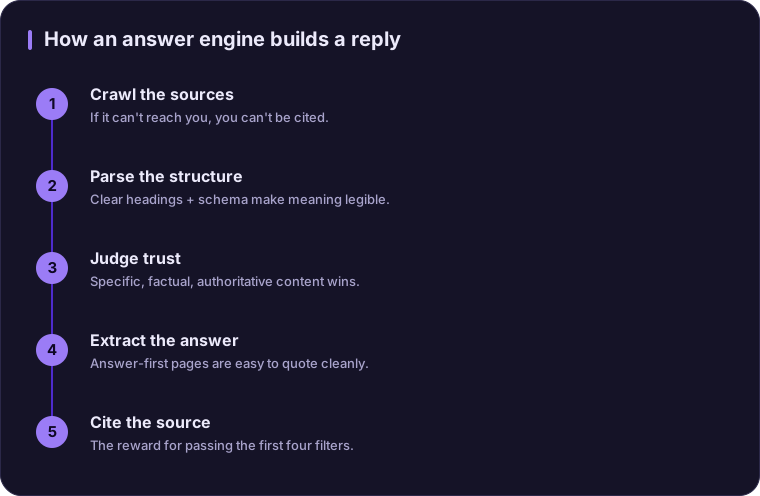
Every step is a filter you can pass or fail. AEO is the practice of passing all five so your content is the one it quotes.
The AEO fundamentals
Five things make content citable. Answer-first structure: put the direct answer near the top of the section, then elaborate, so an extractor can lift a clean response. Structured data: use schema so the machine understands what your page says, following the vocabularies at schema.org; FAQ and article markup are especially useful because they map questions to answers explicitly. Factual specificity: concrete, verifiable claims are quotable in a way that vague adjectives are not. Machine-readability: clean, crawlable pages that AI systems can actually access, which increasingly includes being explicit about what you allow, as with the emerging llms.txt convention. And freshness: keep time-sensitive content current, because answer engines discount stale sources for anything that changes.
You still cannot fake authority
AEO is not a set of tricks that gets thin content cited. Answer engines are built to surface genuinely useful, trustworthy sources, and the structural moves only help if the substance is there. The winning combination is real expertise, real specificity, and real proof, made easy for a machine to extract. Structure without substance gets you parsed and ignored. The automation makes good content legible; it cannot make bad content authoritative.
Where automation fits
Automation helps with AEO on both sides: producing content in a citable shape, and monitoring whether you are getting cited. On the production side, a pipeline can enforce answer-first structure, generate the FAQ and schema markup that make content extractable, and check that pages are machine-readable, turning AEO best practices into a repeatable process instead of a thing you remember sometimes. The same on-page automation that handles titles and internal links can add the structured data that answer engines rely on. On the monitoring side, automation can track whether your brand and pages appear in AI answers for your key questions, so you can see what is working and where you are absent.
Grounding matters here too. The content most likely to be cited is specific, accurate, and backed by real information, which is exactly what a RAG-grounded content system produces. Combine grounding for substance, on-page automation for structure and schema, and monitoring for feedback, and you have a repeatable AEO system rather than a hopeful guess. n8n can wire these together: pull your content, ensure it is answer-first and schema-marked, publish it, and watch for citations, all on a schedule.
For agencies
AEO is the most forward-looking service an agency can offer right now, and being early is a real advantage because most competitors are still optimizing purely for links. Position it honestly as building on SEO, not replacing it: the fundamentals still matter, and AEO adds the structure and specificity that get clients cited in AI answers. Clients are hearing about ChatGPT and AI Overviews eating their traffic and are anxious about it, so an agency that can explain what is happening and act on it is answering a question they are already asking.
Build AEO into your content and technical work: answer-first structure, schema markup, machine-readable pages, and freshness as standard, plus monitoring of whether clients appear in AI answers for their priority questions. Report on citation presence, not just rankings, because that is the metric that will matter more every quarter. Be careful not to oversell it as a magic trick; the credibility comes from treating AEO as disciplined, substance-first work made legible to machines. The agencies that build this competency now will look prescient in two years, and the ones still selling rankings-only will be explaining why traffic fell.
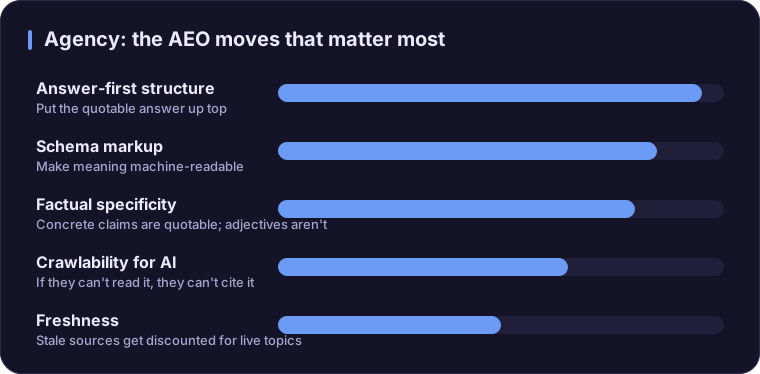
Lead with structure and schema because they are automatable and high-impact. But none of it works without the substance underneath.
For micro businesses
As a micro business, AEO is a genuine opportunity to punch above your weight, because answer engines care about clear, specific, useful answers more than about domain size or backlink count. If you provide the clearest, most specific answer to a real question in your field, you can be cited alongside or instead of much larger competitors. Your first-hand expertise is exactly the specific, factual substance answer engines reward, and most small businesses are not optimizing for this at all yet.
The practical steps are approachable. Answer the real questions your customers ask, directly and specifically, on your site. Structure each answer so the response comes first and the detail follows. Add basic schema, especially FAQ markup and local business markup if you serve an area, which is easy to generate and helps machines understand you. Make sure your pages are crawlable. You do not need scale for this; you need clarity and specificity, which are things a knowledgeable small business can provide better than a large one hiding behind vague marketing copy. Being the clearest answer to a specific question is a game you can win.
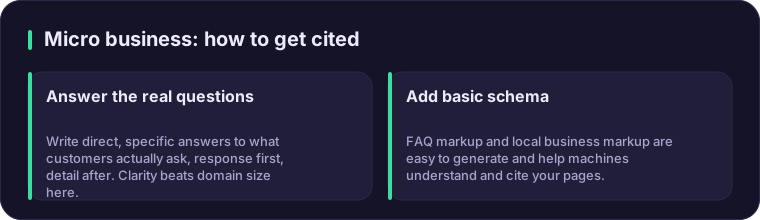
Answer engines reward the clearest, most specific answer, not the biggest domain. That is a game a knowledgeable small business can win.
For SMEs
An SME has the content volume and the resources to build AEO into a real process, and enough at stake as AI search grows to make it worthwhile now rather than later. Systematically restructure your key content to be answer-first, add comprehensive schema, ensure machine-readability, and keep important content fresh. Because you publish regularly, bake AEO into the production process so every new page ships citable by default rather than being retrofitted later. This is where the on-page and content automation from earlier in this series pays a second dividend: the same pipeline that handles titles and schema can enforce AEO structure.
Add monitoring so you can see whether you are being cited for your priority questions, and feed that back into what you produce. Prioritize the questions that matter commercially, the ones where being the cited answer influences a buying decision, and make sure your best, most authoritative content targets them. Ground that content in your real expertise and data so it has the substance answer engines reward. Done as a system, an SME can establish a citation presence in its space before larger, slower competitors notice the shift, which is a durable head start. The window where this is a differentiator rather than table stakes will not stay open forever.
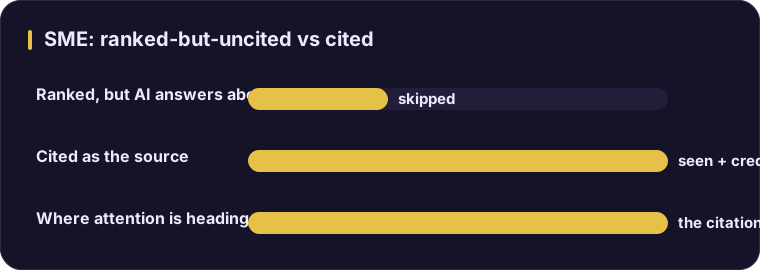
As answers replace links, being ranked but uncited trends toward invisible. Being the cited source is where the attention actually goes.
For mid-market teams
At mid-market scale, AEO is a strategic priority that touches content, technical SEO, and brand, because AI-driven search will reshape how buyers discover you and being absent from AI answers at scale is a real competitive risk. The work is systematic: restructure content for extractability across large libraries, implement comprehensive and valid schema at scale, ensure crawlability for AI systems across all properties, maintain freshness programmatically, and monitor citation presence across brands, products, and regions. This is a cross-functional program, not a tactic, and it deserves ownership.
Treat it as infrastructure and measurement. Build AEO structure and schema into your templates so every page is citable by default rather than retrofitted. Validate schema at scale so invalid markup does not undercut you. Establish AI-citation monitoring as a standing metric alongside rankings and traffic, because it is the leading indicator of visibility in an answer-first world. Ground content in authoritative company data so it has the substance to be trusted. Coordinate across teams so content, technical, and brand pull the same direction. The mid-market organizations that treat AEO as a serious program now will hold their visibility as search shifts; the ones that treat it as a buzzword will watch AI answers quietly route their buyers to competitors who prepared.
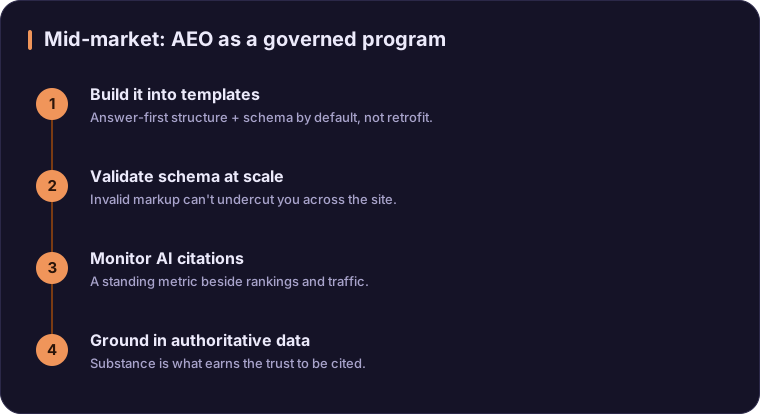
At scale AEO is a cross-functional program with owners and metrics, not a tactic. Citation monitoring is the leading indicator to build it around.
How to measure whether it's working
AEO needs its own scoreboard, because the metrics that defined SEO success do not capture it. Rank and organic clicks still matter, but they miss the point: you can lose the click to an AI answer and still win if that answer cites you, because the citation carries your brand and your authority into the moment the buyer decides. So track citation presence directly. For your priority questions, ask the major answer engines and record whether you are named, quoted, or linked, and watch that set over time the way you watch rankings. Simple automated checks can sample this on a schedule so it becomes a trend line, not a one-off spot check.
Pair the citation signal with the traditional ones to read the whole picture. If your rankings hold but clicks fall, an answer engine is likely intercepting the query, and the real question becomes whether it is citing you or a competitor. If you are cited, that interception is working in your favor; if not, you have a specific, addressable gap. This is also where Search Console mining earns a second life, because a rising-impressions, falling-click-through pattern on informational queries is often the fingerprint of an AI answer sitting above your link. Read the two signals together and you can tell the difference between losing and simply being answered on your behalf. The businesses that adapt fastest are the ones that start measuring citations before a traffic decline forces them to.
Where to start
Pick your most important commercial question, the one where being the cited answer would matter most, and make your page for it genuinely excellent by AEO standards: a direct answer up top, clear structure, schema markup, specific and accurate substance, and a crawlable page. Then check whether AI answer engines cite you for it, and iterate. Prove the approach on one question before you systematize it. Pair it with the on-page automation that adds schema at scale and the grounding that gives content the substance to be trusted.
The shift is already underway
You do not have to bet on a distant future here. AI answers are already intercepting searches today, and the share is growing. Getting cited is becoming as important as ranking, and the businesses structuring for it now will hold their visibility as the shift accelerates. The cost of starting early is small; the cost of waiting until your traffic drops is the traffic.
AEO is where every thread in this series converges: content engines for production, on-page automation for structure, RAG for substance, and monitoring for feedback. If you want an AEO program built and run for your business, structured, grounded, and measured, that is exactly what Elevi is built to do, and you can start a conversation about it.
Frequently asked questions
What is Answer Engine Optimization (AEO)?
Answer Engine Optimization, sometimes called generative engine optimization or GEO, is the practice of structuring your content so AI answer engines like ChatGPT, Claude, Perplexity, and Google's AI Overviews can find, understand, and cite it in their answers. It builds on traditional SEO but optimizes for being the source an AI quotes, not just a link on a results page, because a growing share of searches now end in an AI answer rather than a click.
How do you get cited by ChatGPT or Google AI Overviews?
Answer engines cite content that is easy to extract and clearly authoritative: pages that answer questions directly and early, use clear headings and structured data, state facts plainly, and are crawlable by AI systems. The practical moves are answer-first structure, FAQ and schema markup, factual specificity, machine-readable pages, and freshness. Being genuinely useful and clearly sourced matters more than any single trick.
Is AEO different from SEO?
AEO builds on SEO rather than replacing it. The same fundamentals, quality content, technical health, structured data, still apply, but AEO adds a focus on being extractable and citable by AI rather than only ranking for clicks. A page that is well-optimized for traditional search is a good start; AEO makes it easy for an answer engine to pull a clean, quotable answer from it and attribute it to you.
Does structured data help with AEO?
Yes. Schema markup makes your content machine-readable, helping both search engines and AI answer engines understand what your page says and which parts answer which questions. FAQ schema, article schema, and clear factual markup make it easier for an answer engine to extract and cite a specific answer. It is not the only factor, but it is one of the most reliable and automatable ones.
What is actually changing with answer engines?
The unit of visibility. Classic search gave you a position and a click; an answer engine gives you a mention inside a composed response, sometimes with a link and sometimes not. So the target moves from ranking a page to being the source an answer draws on and names.
What are the AEO fundamentals?
Be retrievable, meaning crawlable and allowed. Be extractable, meaning the answer sits in a clear self-contained passage under the question. Be worth quoting, meaning specific and sourced. And be corroborated, meaning the same facts appear consistently across your site and profiles.
How is AEO different from SEO?
It is mostly the same foundation with two additions: writing the quotable passage deliberately, and making your facts agree everywhere they appear. Anyone selling AEO as an unrelated discipline is repackaging fundamentals, and anyone claiming SEO is dead has confused a surface with the work underneath it.
Where does automation genuinely fit in AEO?
In the measurement and the mechanical checks: running the monthly question panel, monitoring which AI crawlers fetched what, validating structured data, and flagging pages with no extractable answer. The writing itself is where automation adds least, because specificity is the whole point.
How do I measure whether AEO is working?
A fixed panel of buyer questions asked monthly across the engines, scored on whether you are named and whether the description is accurate. Plus server logs showing which AI crawlers are reading you and how often. Neither is a rank tracker, and together they are an honest read on a surface without rankings.
What does rising crawl with no citations mean?
Usually that you are in the retrieval pool but not the quotable set. The engine is reading you and choosing someone else's phrasing. That points at extraction rather than access: the pages need direct answers near the top rather than more content or more technical work.
Does AEO reduce traffic even when it works?
It can, and that is the honest trade. Some questions get answered without a click, and the visitors who do arrive have already been pre-qualified by a conversation. For businesses selling considered work, fewer better-informed visitors is usually a better outcome than more browsers.
Where should a team start with AEO?
Confirm the AI crawlers are not blocked, then rewrite the top five pages so each opens with a direct answer to the question it targets, then baseline a question panel. That sequence costs a week, and it exposes whether your problem is access, extraction, or simply not having answered anything yet.